Navigation Unification
Marketplace • Quote Funnel • PFM App
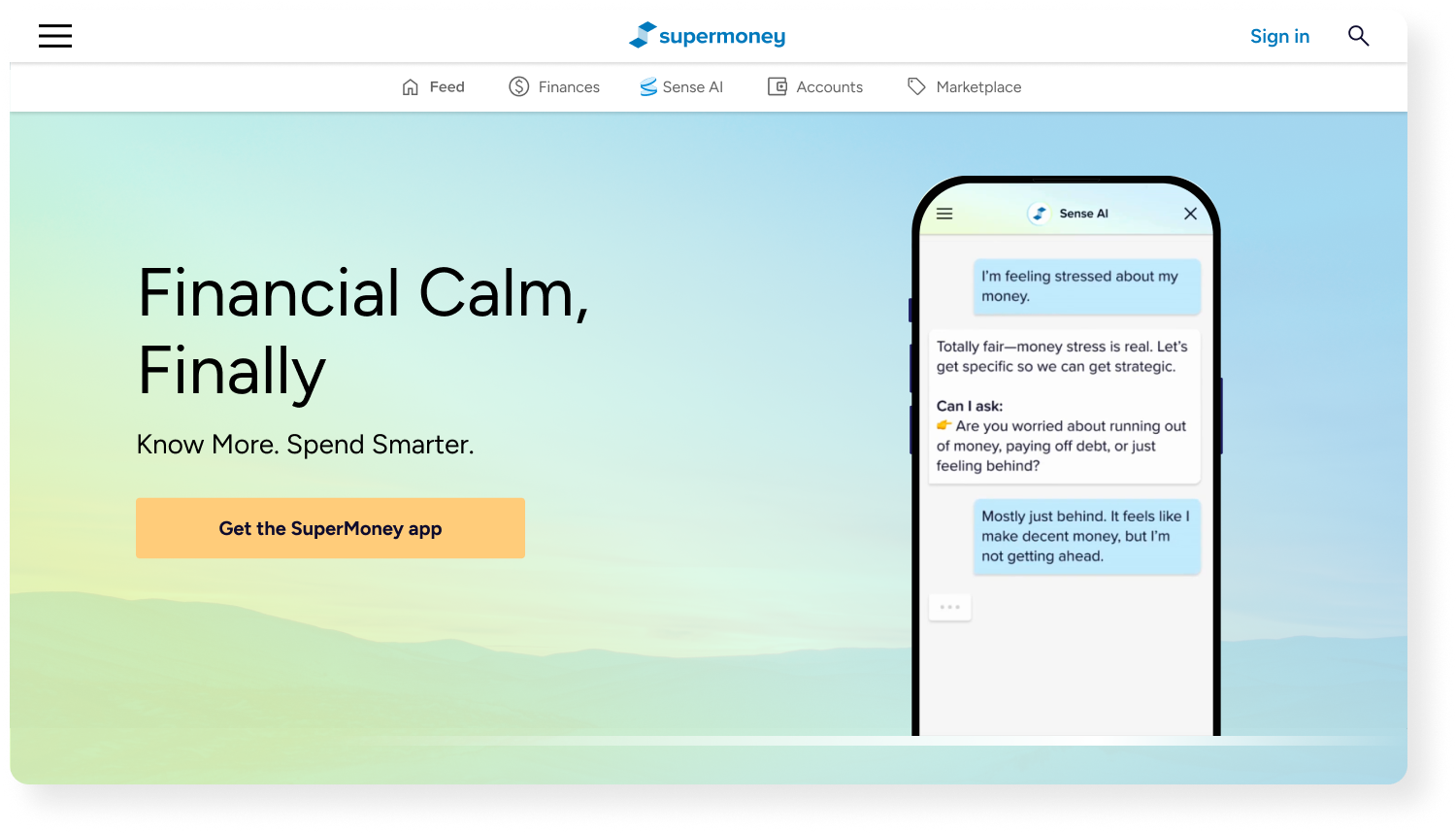
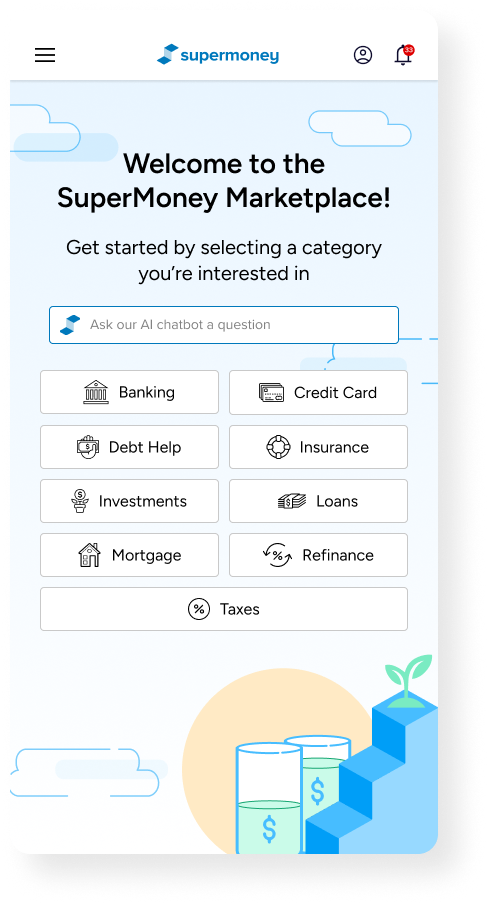
SuperMoney operates across disconnected platforms—a web marketplace, quote funnel, and mobile app—which created fragmented user experiences. As the company shifted to an app-first strategy, this project focused on unifying navigation across all surfaces to create a cohesive ecosystem that guides users from initial discovery to long-term engagement within the app.
ROLE
Lead Product Designer
TIMELINE
Feb - Apr 2026
PLATFORMS
Web • iOS • Android
RESPONSIBILITY
Led the redesign of SuperMoney’s cross-platform navigation to unify the Marketplace, Quote Funnel, and Mobile App.
Audited existing navigation across platforms to identify gaps and inconsistencies
Researched competitor systems (e.g., MoneyLion, Monarch) to inform best practices
Partnered with the CEO to define a new app-centric information architecture
Designed a scalable navigation system to support seamless cross-platform experiences
Updated the design system components to reflect new patterns and ensure consistency
Mapped key user flows and behaviours to optimize transitions into the app
Created a PRD to align stakeholders and support engineering handoff
Background
Our current navigation does not seamlessly connect users to the app experience.
Historically, SuperMoney’s growth was driven by its Marketplace, where users compare financial products (loans, credit cards, etc.). Over time, the company introduced a mobile app designed to support deeper financial engagement and recurring value (subscriptions, tracking, personalization).
However:
These platforms evolved independently
Navigation patterns, IA, and user flows were inconsistent
There was no clear pathway from Marketplace to App
As a result, users experienced SuperMoney as fragmented products rather than a unified financial platform.
At the same time, the business made a strategic shift:
Position the mobile app as the primary product and long-term growth engine
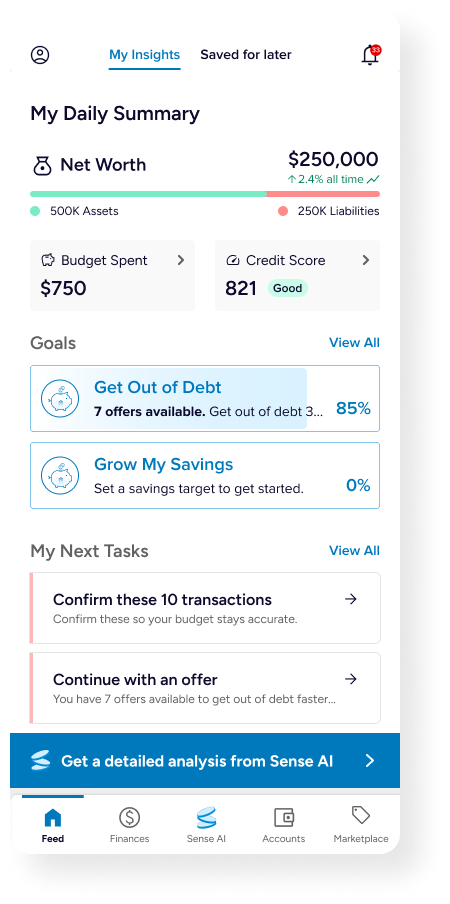
PFM App: Help users manage their finances and reach their financial goals
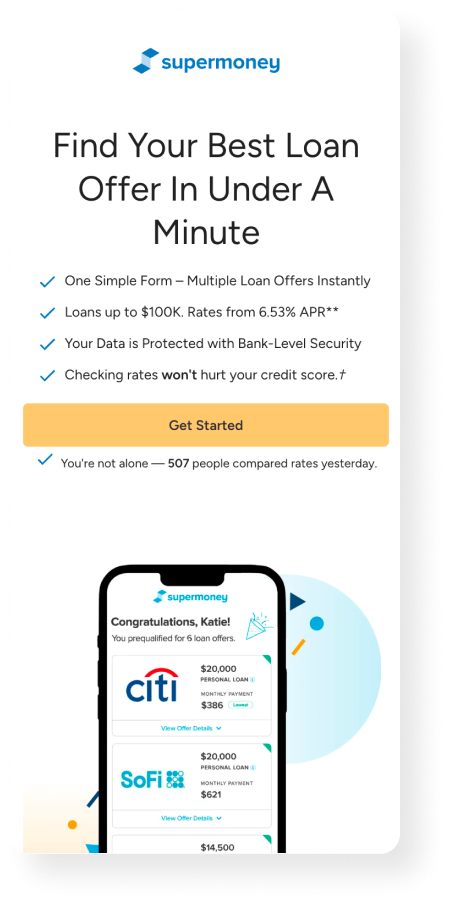
Quote Engine: Helps users find the best financial product for their scenario
Marketplace: Browse financial products and content
The Problem
The existing navigation system failed both users and the business:
User Problems
Disjointed experience between Marketplace, Quote Funnel, and App
No intuitive way to transition into the app experience
Lack of continuity in user journeys (progress, context, saved data)
Confusion around where to go next
Business Problems
Underutilization of 2M existing Marketplace users
Missed opportunity to convert high-intent users into app subscribers
Weak ecosystem lock-in and retention
Siloed product experiences limiting cross-sell and upsell
Users
Primary Audience
Existing SuperMoney Marketplace users (high intent, comparison-driven)
Key Traits
Financially motivated (looking for better rates, loans, credit options)
Goal-oriented but often overwhelmed by choices
Value clarity, trust, and efficiency
Behavioural Insight
Many users complete a transaction (e.g., find a loan) and leave instead of continuing into a longer-term financial relationship via the app
Users in the quote funnel often experience decision paralysis due to the volume and complexity of options. Many struggle to find an offer that clearly aligns with their specific goals, leading to hesitation or drop-off
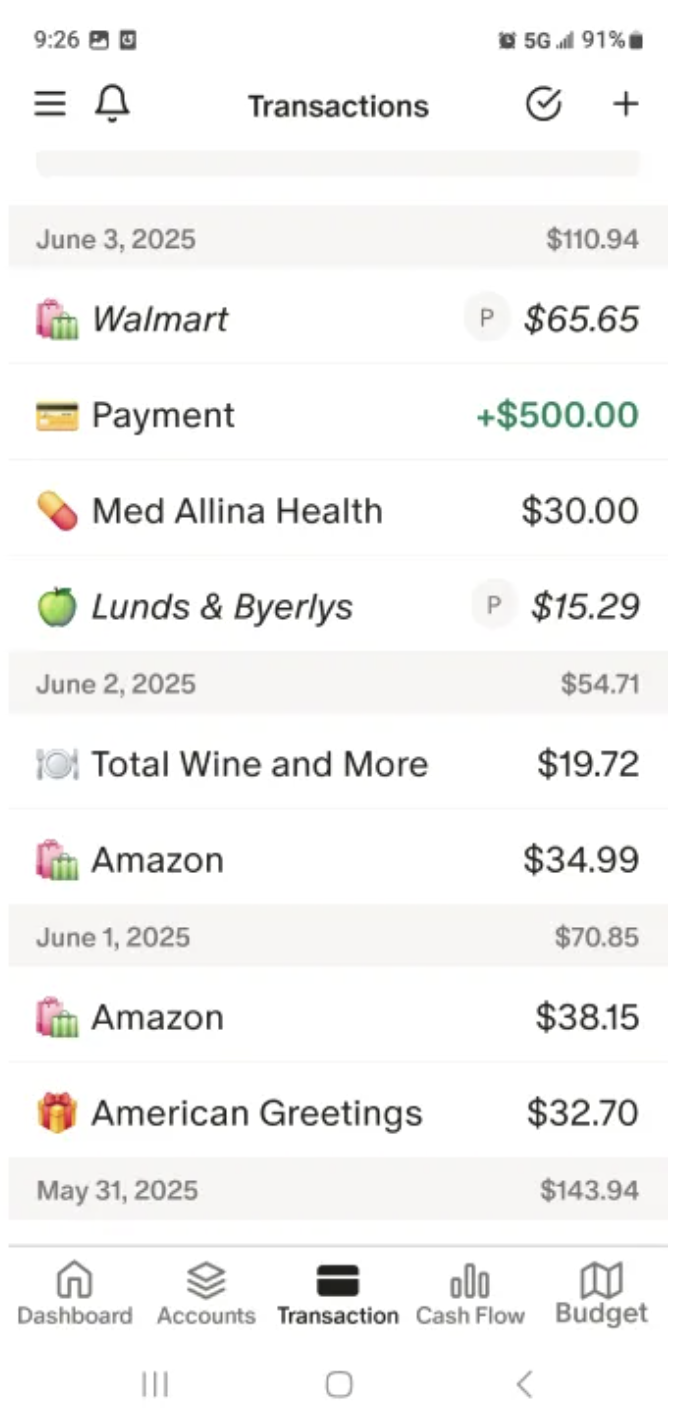
Competitive Analysis
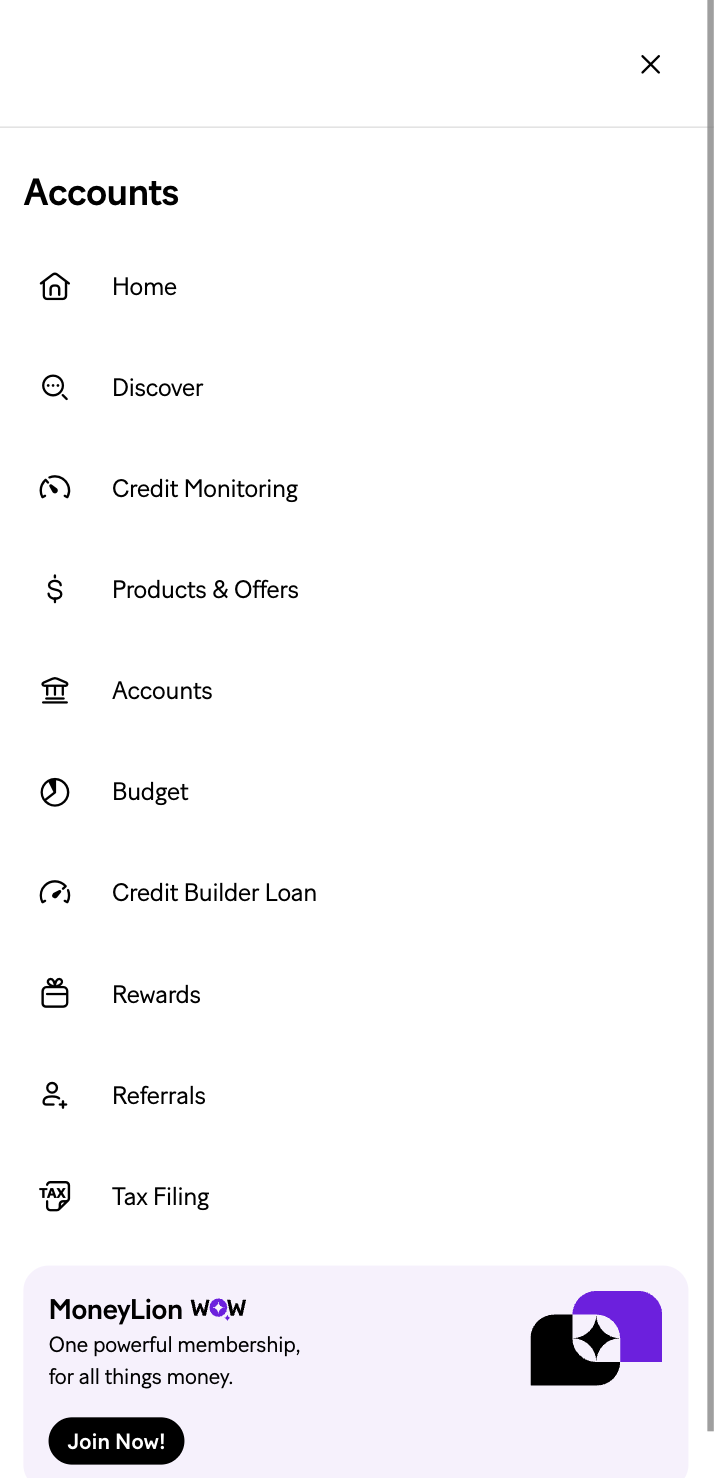
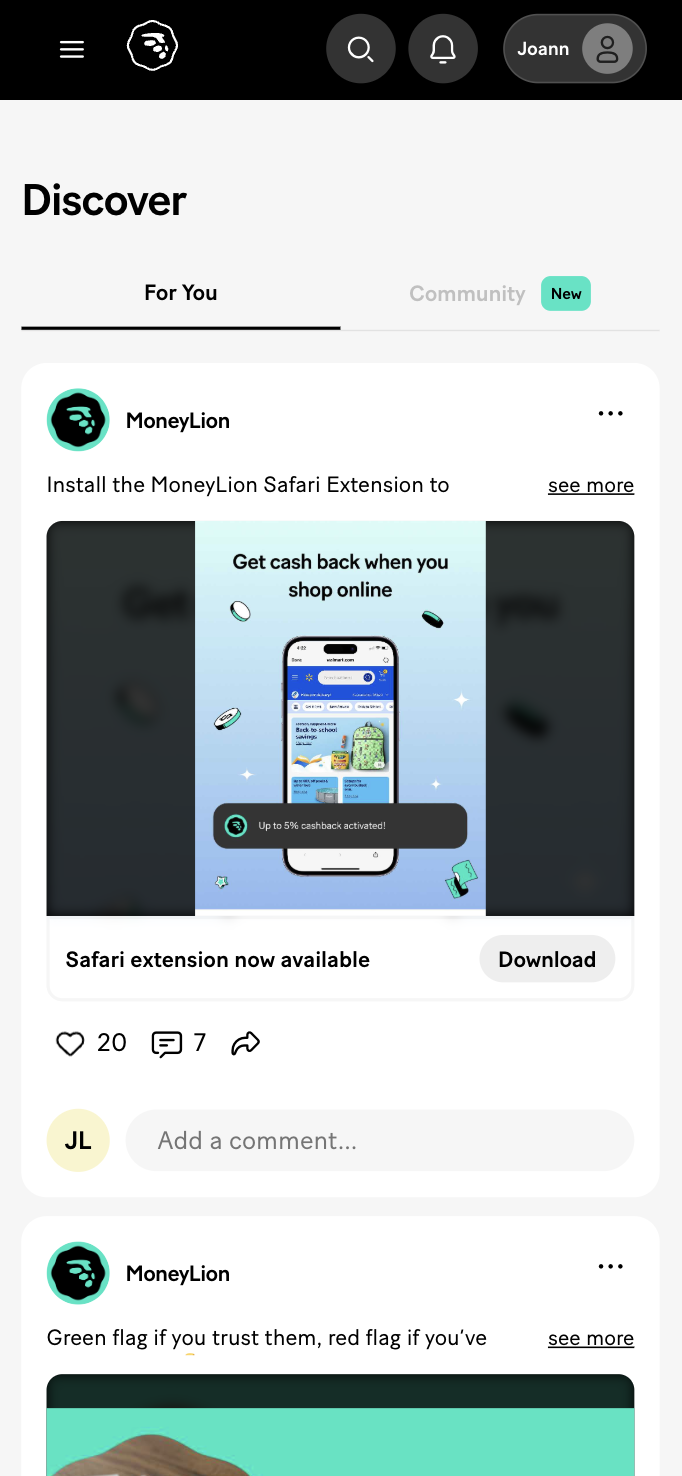
MoneyLion
Strong app-first ecosystem
Clear entry points into high-value features
Persistent navigation reinforcing habit loops
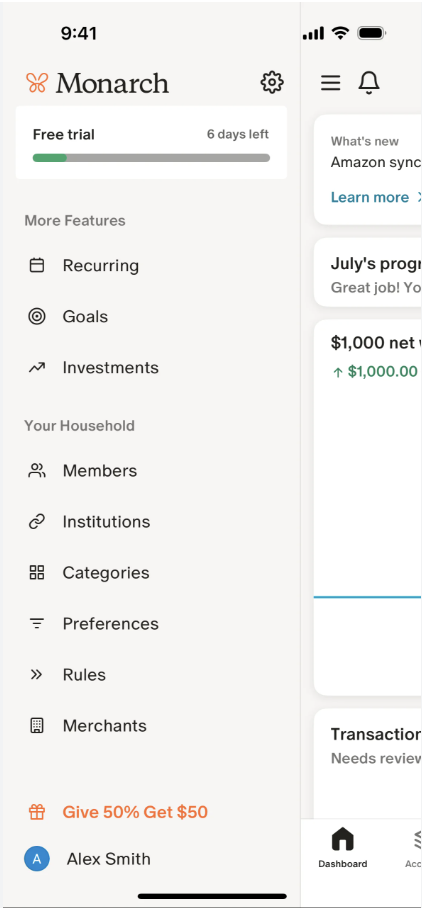
Monarch
Clean, simplified navigation
Focus on clarity and mental models
Strong sense of “home base” within the product
Opportunity
Reframe navigation as a growth lever, not just a UI component:
Turn the Marketplace into a top-of-funnel entry point
Use navigation to pull users into the app ecosystem
Create a continuous journey instead of isolated sessions
Information Architecture
Current information architecture
User menus are not consistent with each other
Marketplace users and PFM users are different
No major link to the app except through quote funnel or marketing ads.

New information architecture
User menu and main nav are now consistent throughout the entire experience
All users that log into SuperMoney are now considered a PFM user. Marketplace lives within the app now.
Easier way to find the Marketplace and Offer Engines within the app.
Logged out users


Logged in users
User Flow
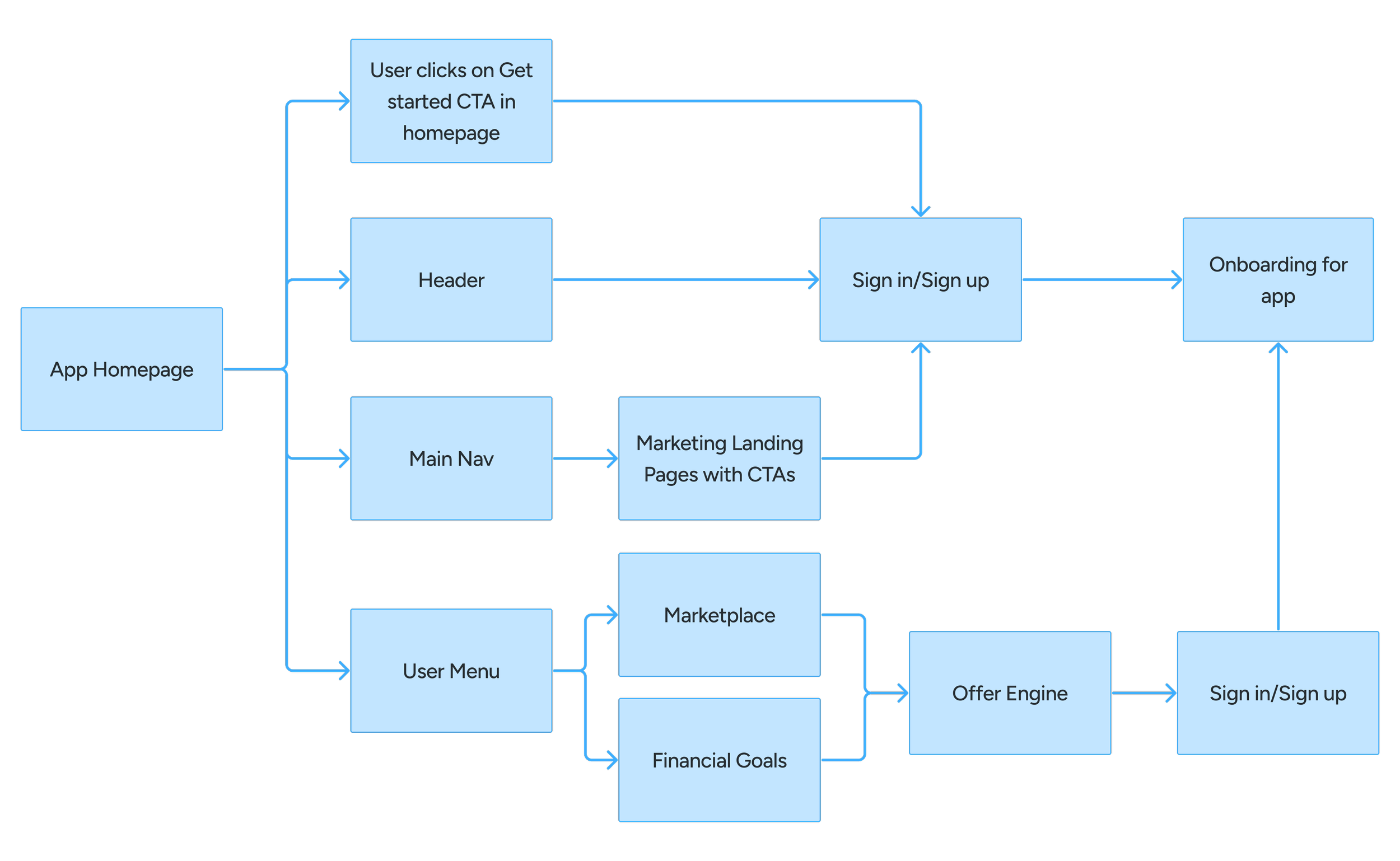
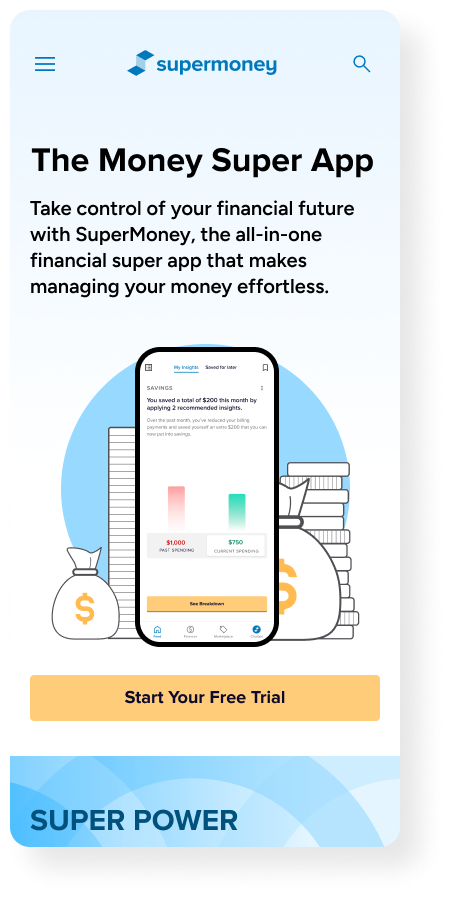
Users currently have limited access to the app, primarily through marketing banners and footer links, making it easy to miss or overlook.

Users now have multiple, clearly visible entry points to the app—including the header, navigation, user menu, and marketing pages—making access more seamless and discoverable.
Solution
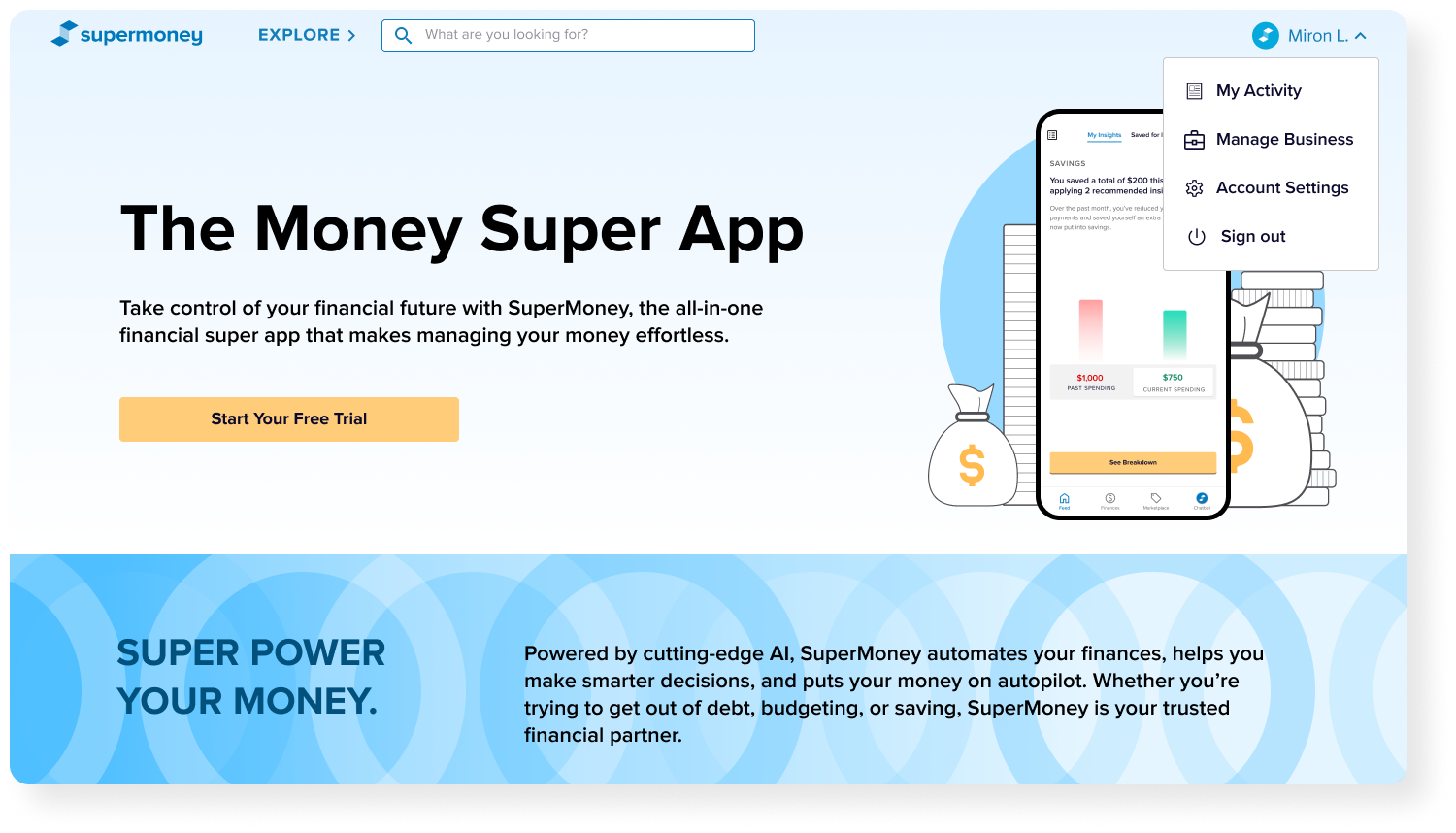
The header has been streamlined to cohesively incorporate the logo, user menu, profile indicator, and notifications. Previously overcrowded, it is now simplified and aligned with the mobile experience for greater consistency.
Header
Header before
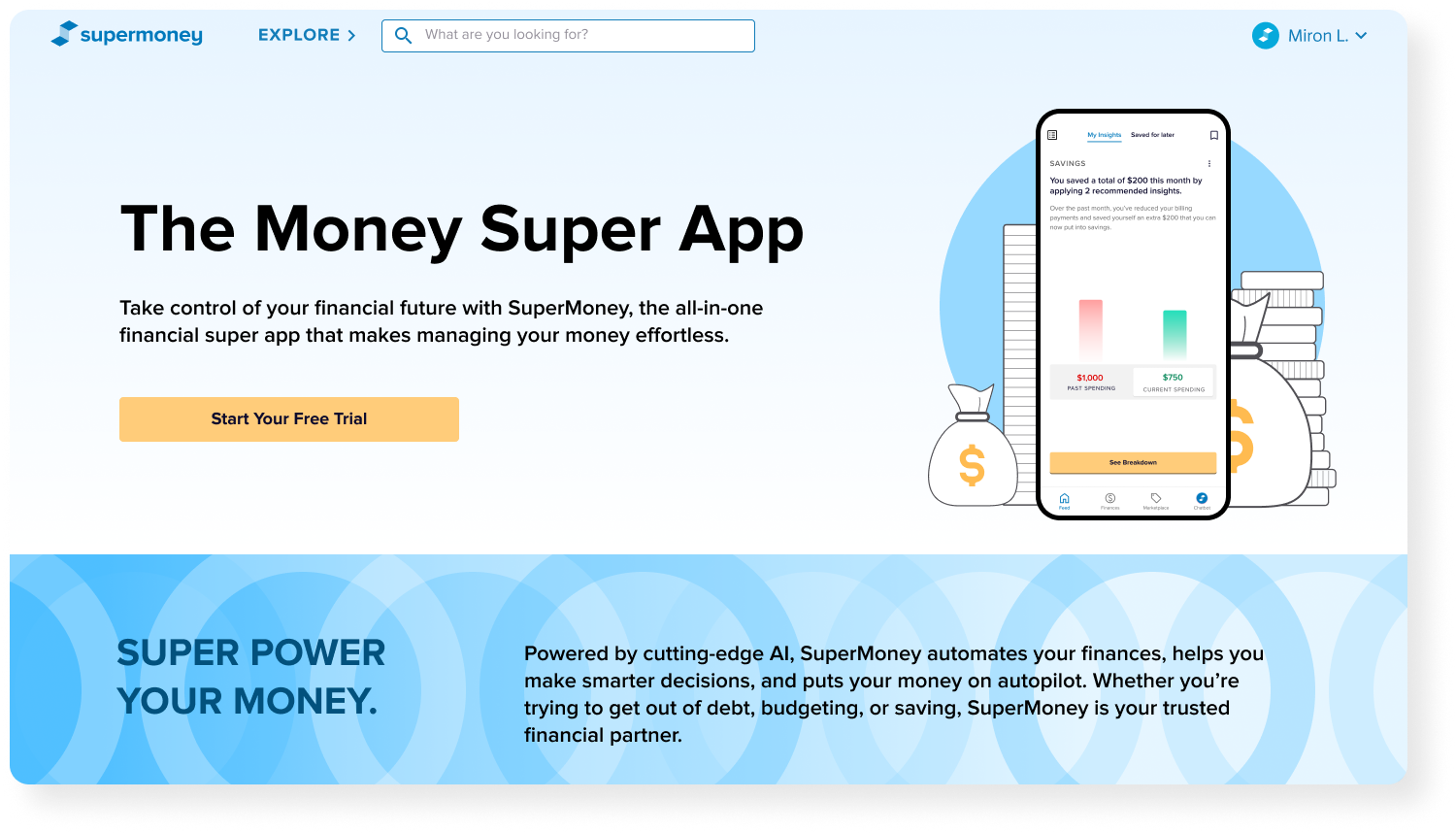
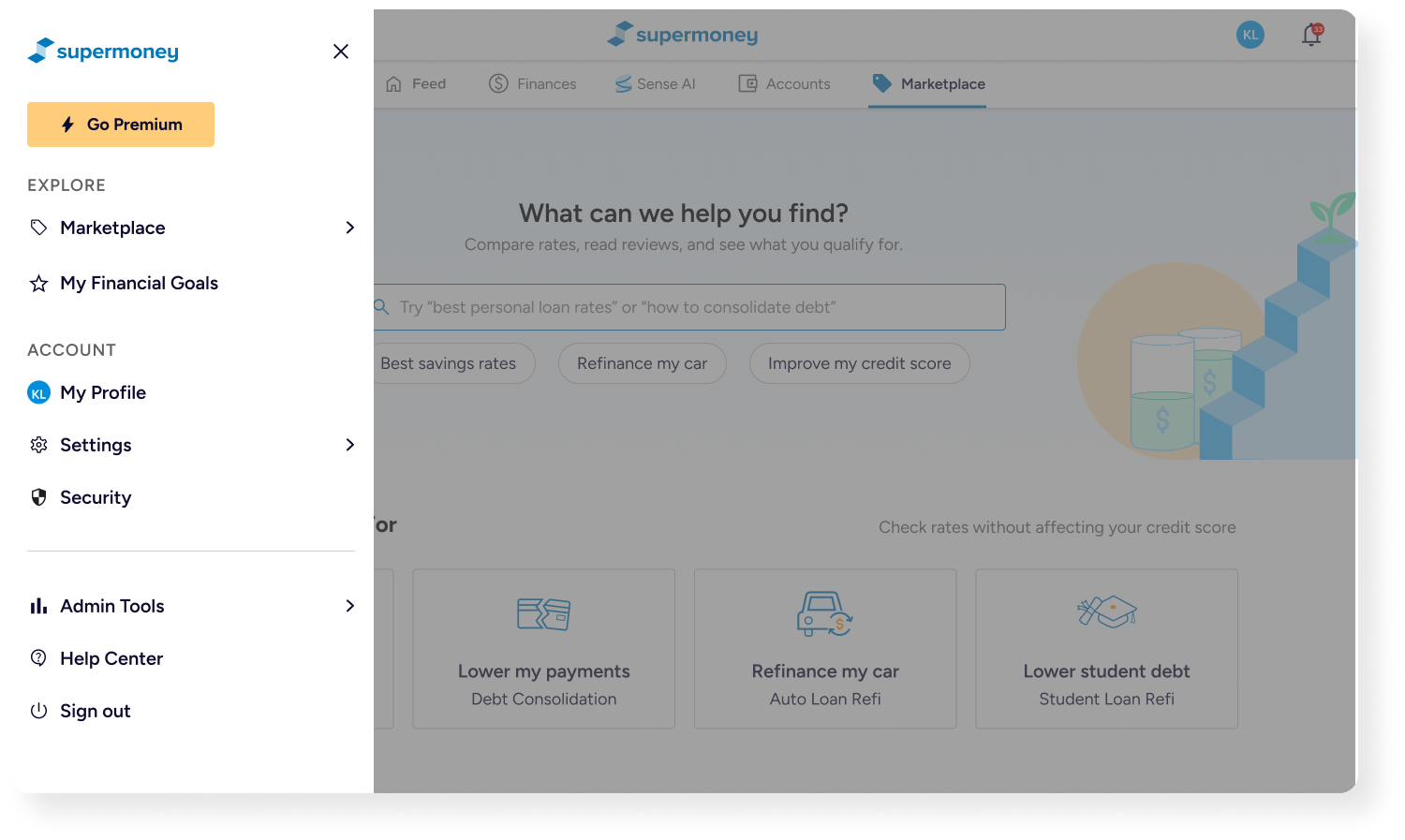
Header Redesigned
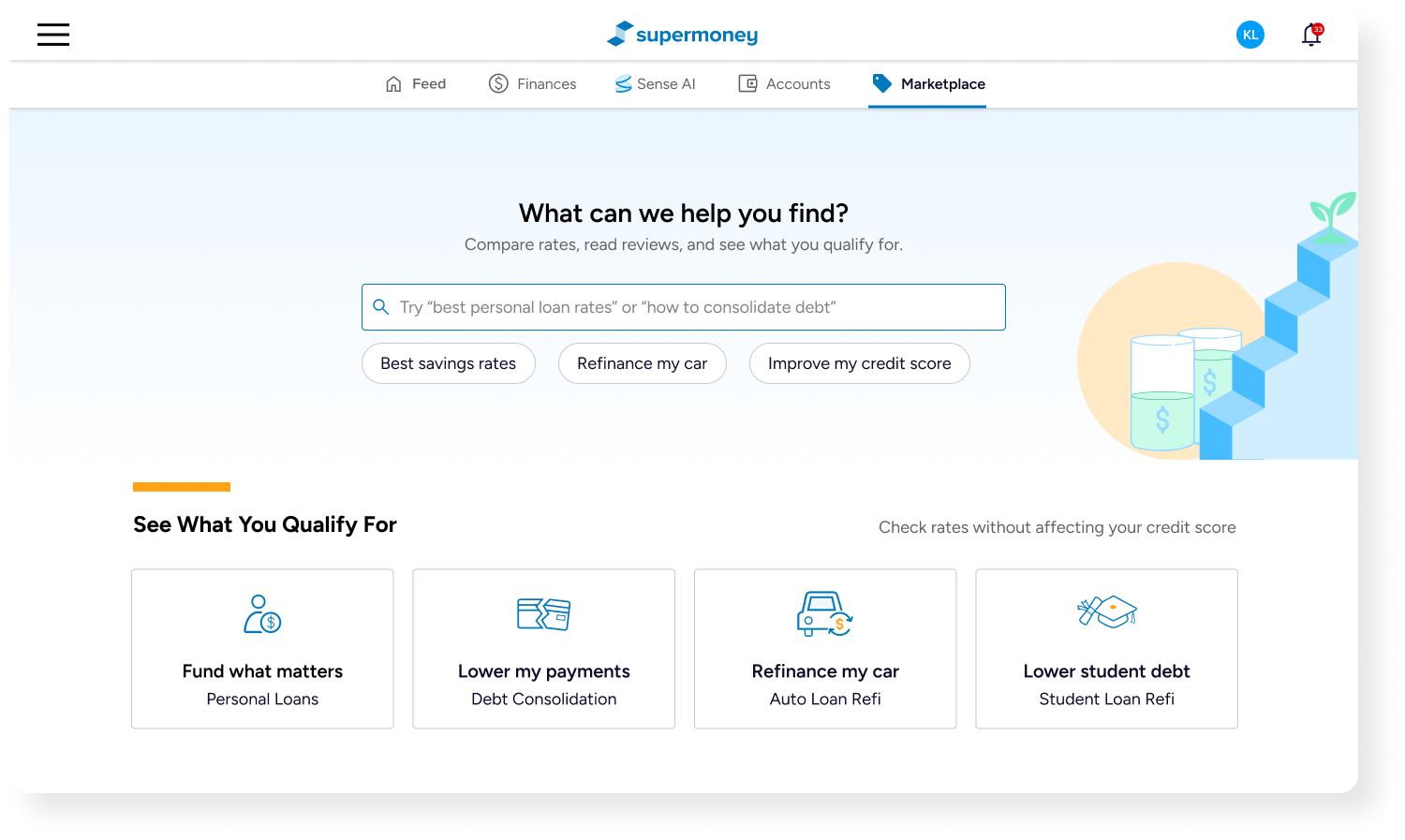
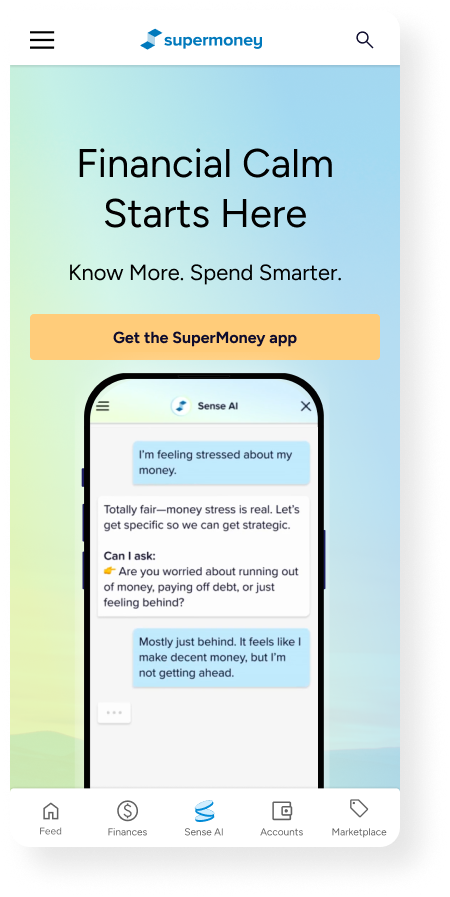
The main navigation remains fixed at the bottom of the screen for both logged-in and logged-out states, keeping users consistently anchored in the app experience. Even when logged out, the tabs serve to educate and promote the app, while maintaining a stable UI that helps users build familiarity without shifting layouts.
Main Nav
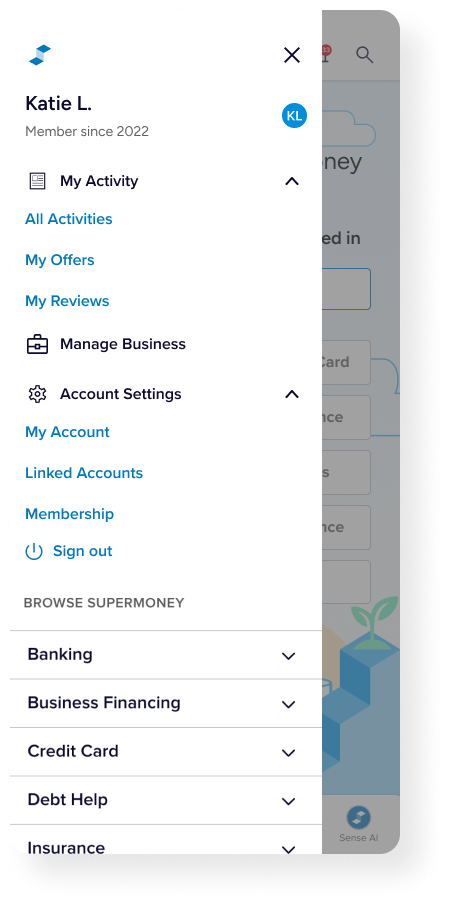
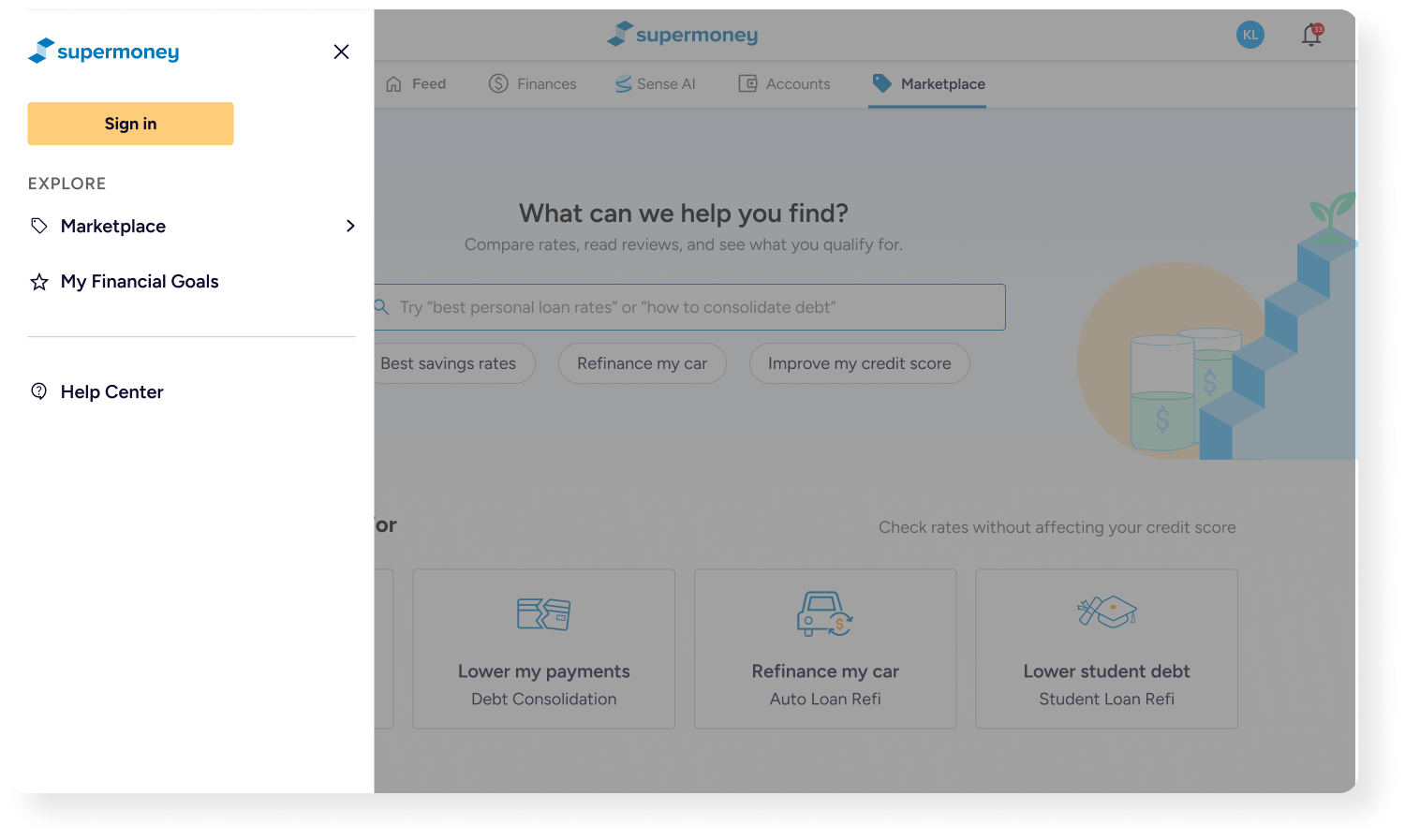
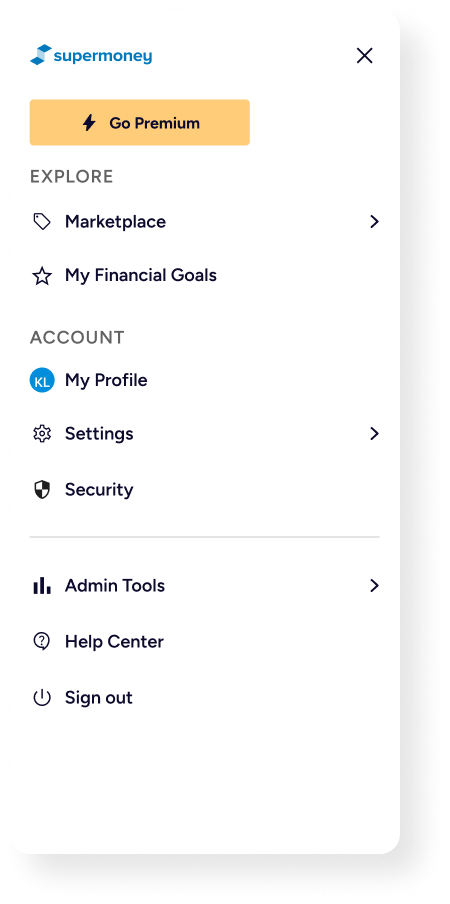
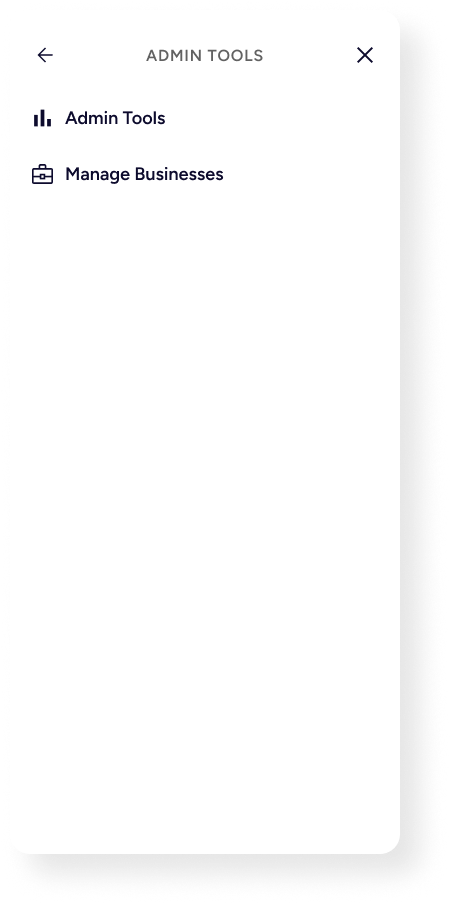
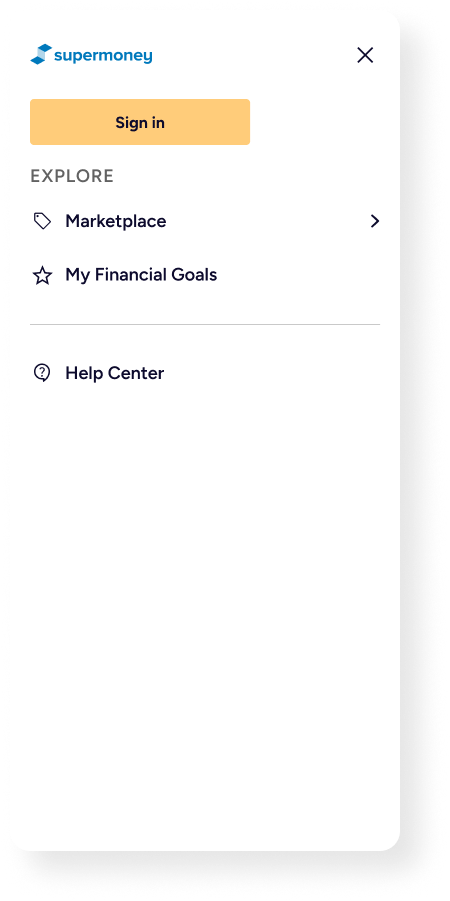
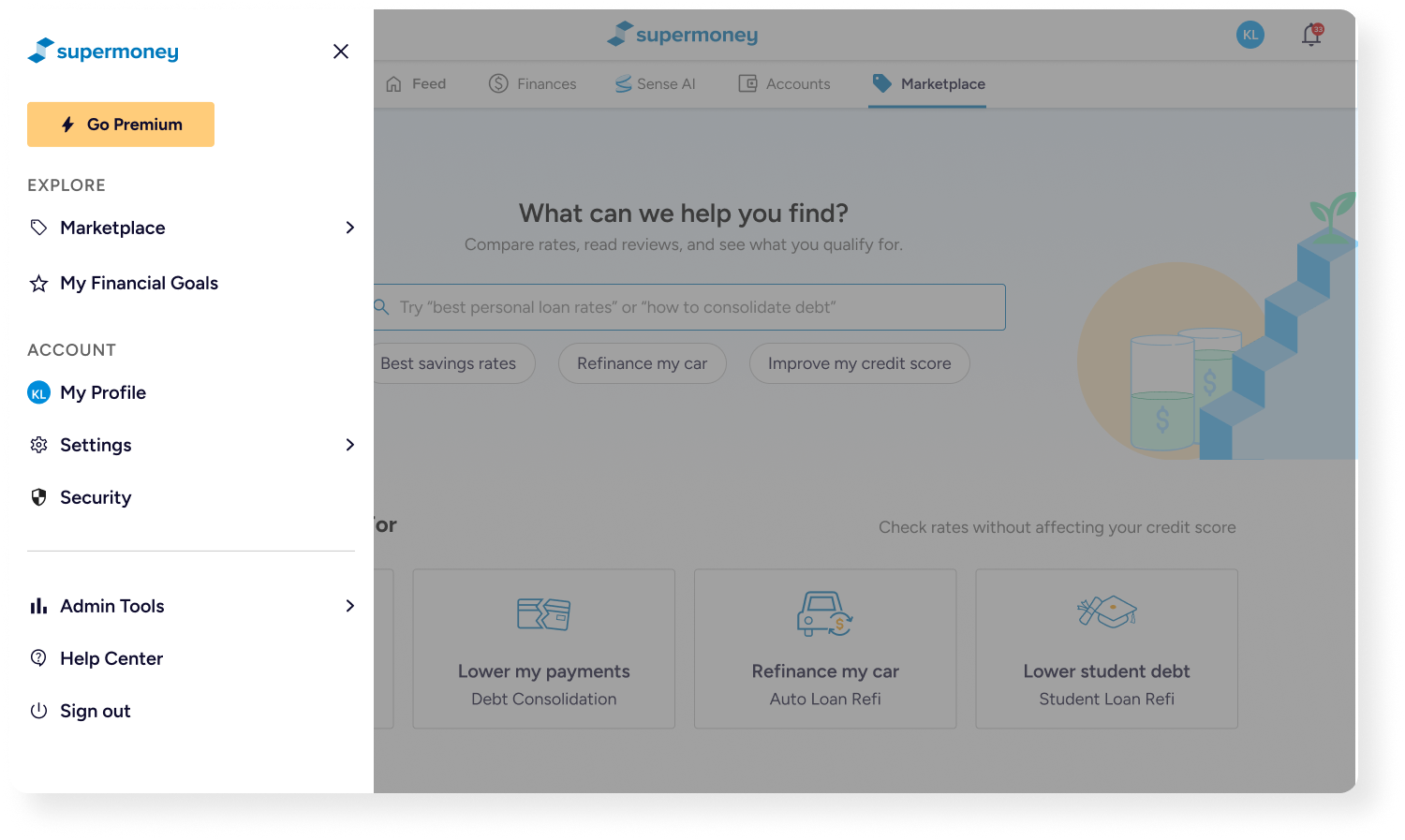
Combined multiple menus into a single, unified menu to create a clear, centralized place for navigation. Previously, separate user and marketplace menus in the mobile header caused inconsistency and clutter. The new structure groups items under headers for easier scanning, with arrows indicating submenus. It also provides a dedicated space to promote premium upgrades and surface a sign-in entry point when users are logged out.
User Menu
User Menu Redesigned
Admin Tools
Logged out
Main Nav Redesigned
No Main Nav Before
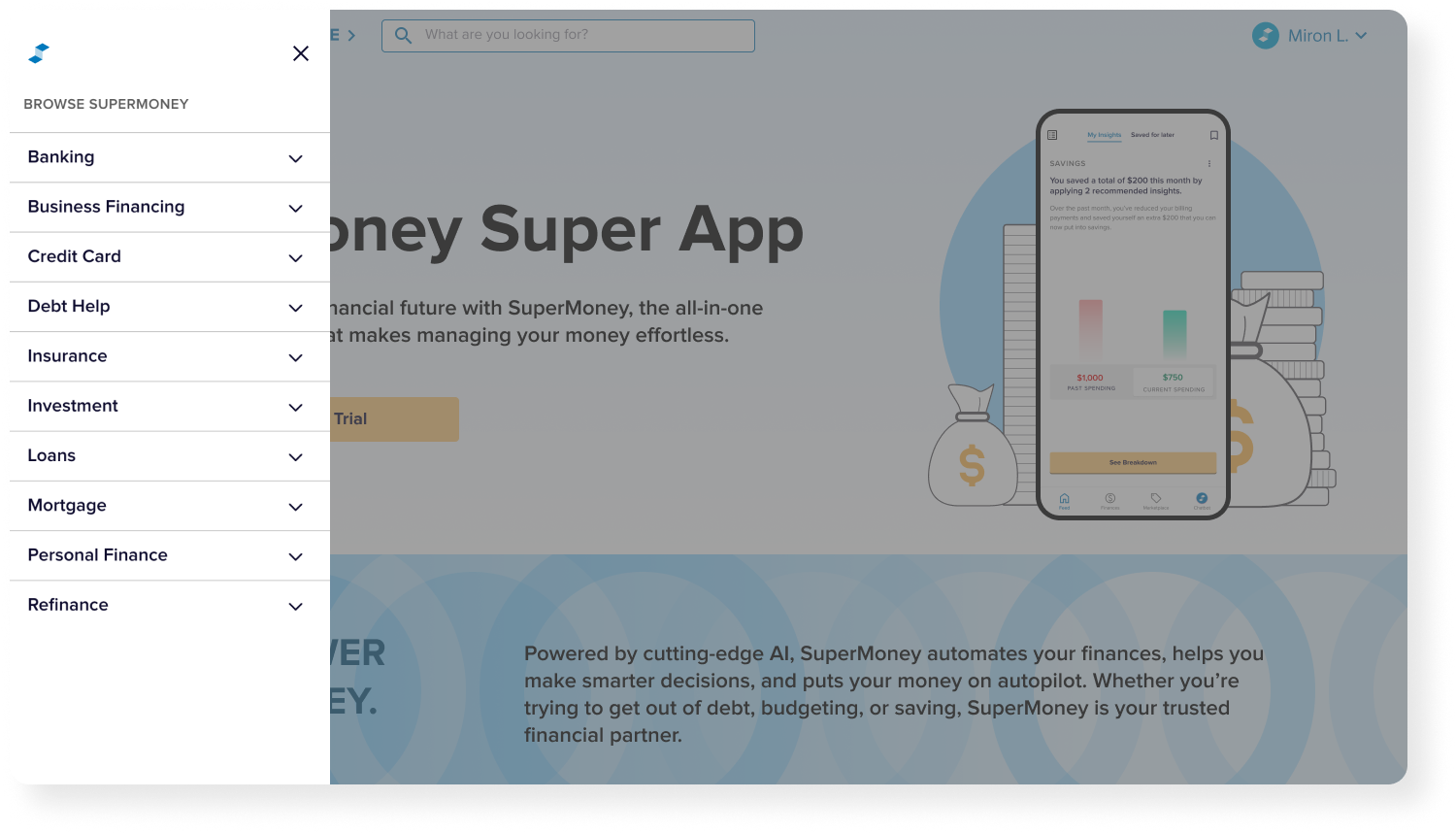
Before: Separated User and Explore Menu
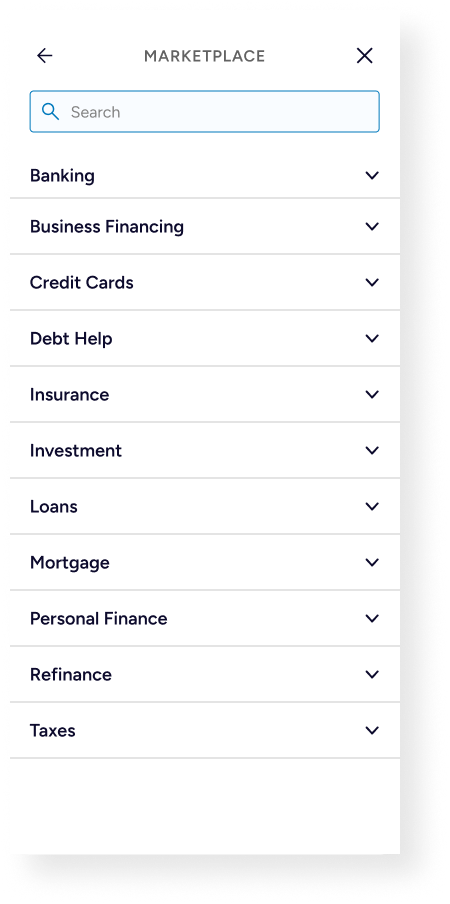
Marketplace Menu
Settings Menu
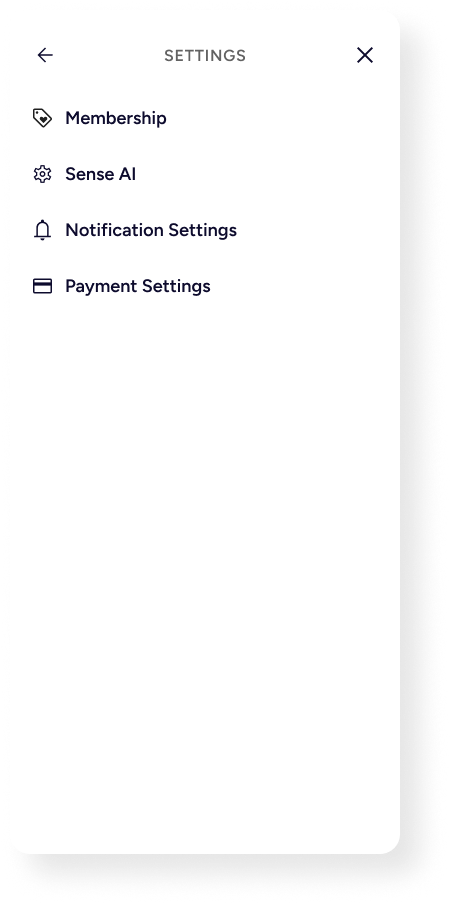
Component Variations
Web Headers

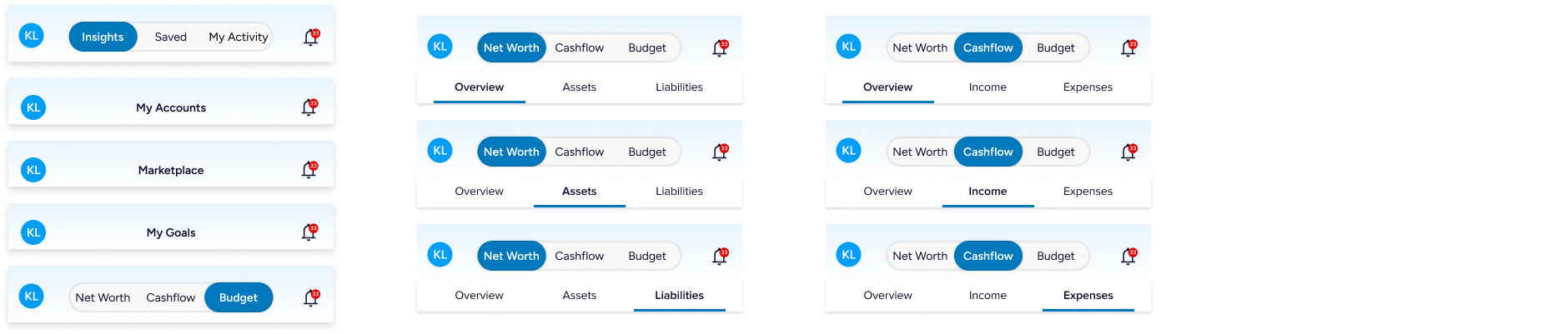
Mobile Header Variations
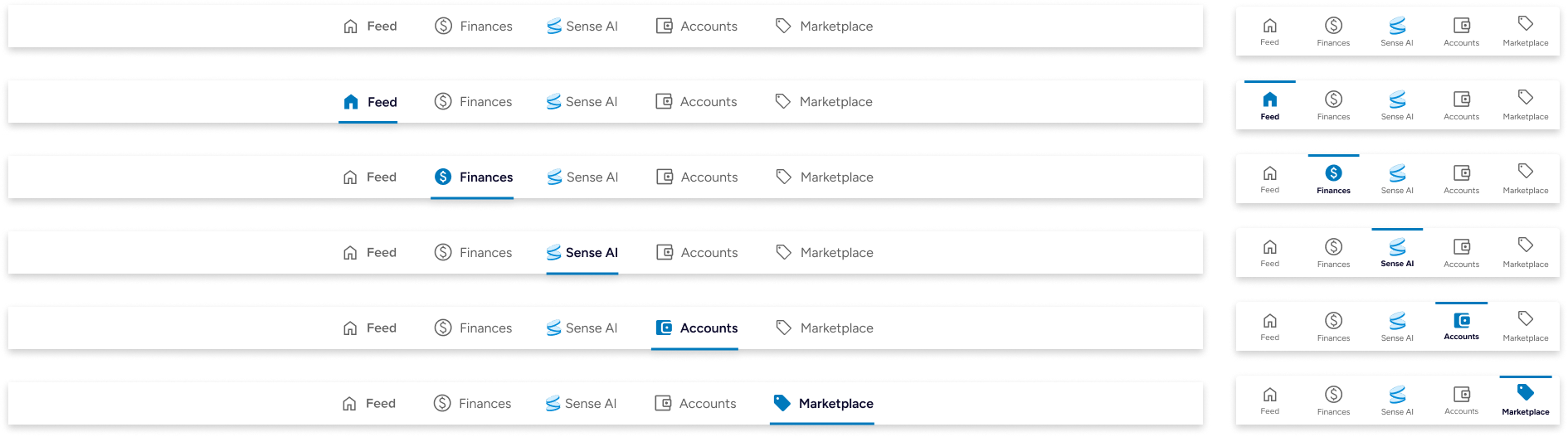
Main Navigation
Walkthrough
Impact
The navigation redesign is in the implementation phase. But we’re already seeing improvements with small adjustments and tests.

This redesign is expected to increase app adoption by leveraging high-intent Marketplace traffic and reducing friction in cross-platform transitions.

In March 2026, we launched a quick navigation update allowing users to toggle between App and Marketplace. This drove a 134% increase in app discoverability and a 93% increase in onboarding starts. With a more consistent, fully developed version on the way, we’re confident the experience will improve even further.
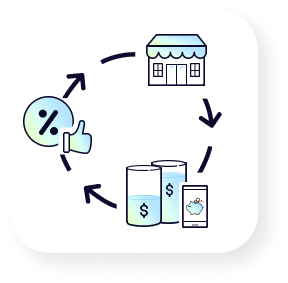
With the unification of the app, marketplace, and offer engine navigation, users can more easily find what they’re looking for and understand how these systems relate to one another—ultimately helping them achieve financial calm.
Legacy systems and technical limitations across platforms
Different teams owning Marketplace vs App
Need to avoid disrupting existing revenue-driving flows
Balancing short-term conversion with long-term retention
Challenges
Navigation can directly influence business outcomes, not just usability
Aligning product surfaces requires both UX thinking and product strategy. It’s about understanding how systems like the app, marketplace, and offer engine connect and support the broader user journey, not just optimizing individual screens.
Designing for ecosystems means going beyond screens to consider how each surface fits into the larger product system. This creates clearer relationships between parts of the product, reduces friction, and helps users move through experiences more intuitively.